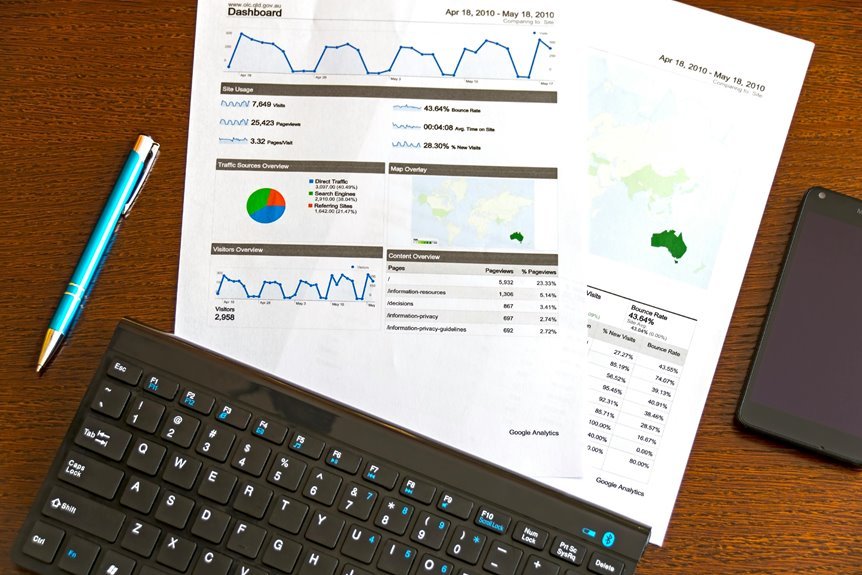
Enterprise analytics is transforming the landscape of business decision-making with a focus on data-driven strategies. Companies are increasingly harnessing unique datasets to refine their operational efficiency and marketing efforts. This evolution is not just about data collection; it encompasses predictive analytics and advanced visualization techniques. As organizations prepare for future shifts, the integration of artificial intelligence and real-time analytics will play a pivotal role in shaping their strategies. What implications might these trends hold for businesses moving forward?
Key Trends in Enterprise Analytics
As businesses increasingly rely on data-driven decision-making, several key trends are emerging in the realm of enterprise analytics.
Notably, predictive analytics is gaining traction, enabling organizations to forecast future trends and behaviors effectively.
Concurrently, advancements in data visualization tools facilitate clearer insights, allowing stakeholders to interpret complex data intuitively.
Together, these trends empower companies to make informed, strategic choices while enhancing operational efficiency.
Impact of Unique Datasets on Business Strategy
The integration of unique datasets into enterprise analytics significantly influences business strategy, offering organizations a competitive edge.
By leveraging diverse information sources, businesses can uncover insights that drive innovation and enhance decision-making. Unique datasets facilitate targeted marketing, optimize operational efficiencies, and enable agile responses to market changes.
Ultimately, the strategic use of these datasets empowers organizations to navigate complexities and capitalize on emerging opportunities.
Future Directions for Data-Driven Decision Making
Although organizations have made significant strides in adopting data-driven decision-making processes, future directions indicate an even greater reliance on advanced analytics and artificial intelligence.
Enhanced predictive modeling and real-time analytics will empower businesses to anticipate market shifts and consumer behavior more accurately.
This evolution promises to optimize operational efficiency, drive strategic initiatives, and ultimately foster a culture of informed, agile decision-making.
Conclusion
In the ever-evolving landscape of enterprise analytics, organizations are akin to navigators steering their ships through turbulent waters, guided by the lighthouse of data-driven insights. As unique datasets illuminate pathways for targeted strategies, businesses poised to harness predictive analytics and real-time data will find themselves at the forefront of industry innovation. The horizon beckons with the promise of artificial intelligence, marking a transformative era where agile decision-making becomes the wind in the sails of strategic success.